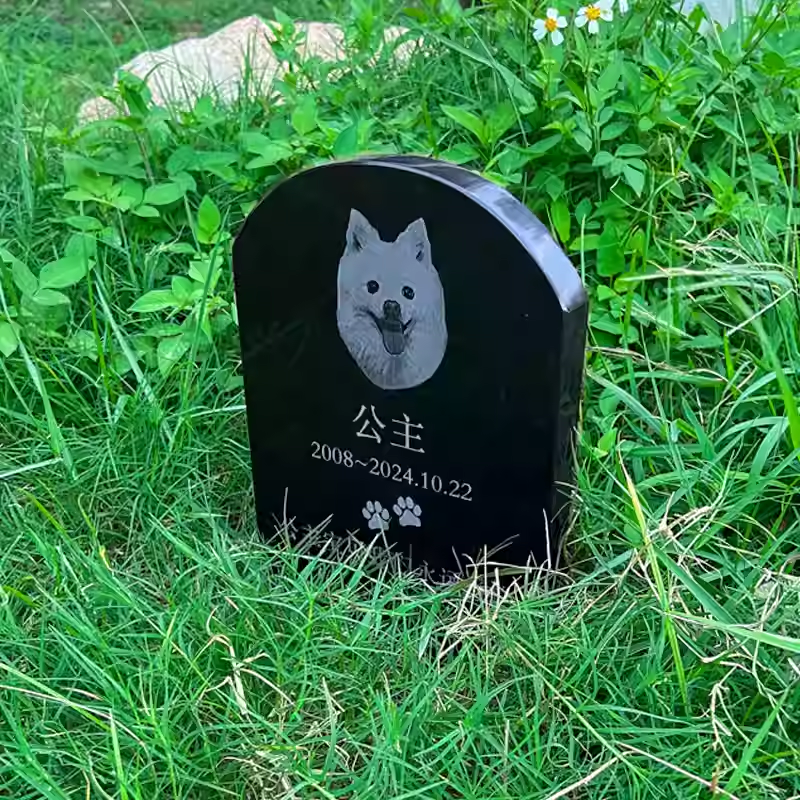
Four Main Disposal Methods
When your pet dies, you need to choose how to handle its remains. Different methods pair differently with a pet tombstone. Understanding each method helps you decide.
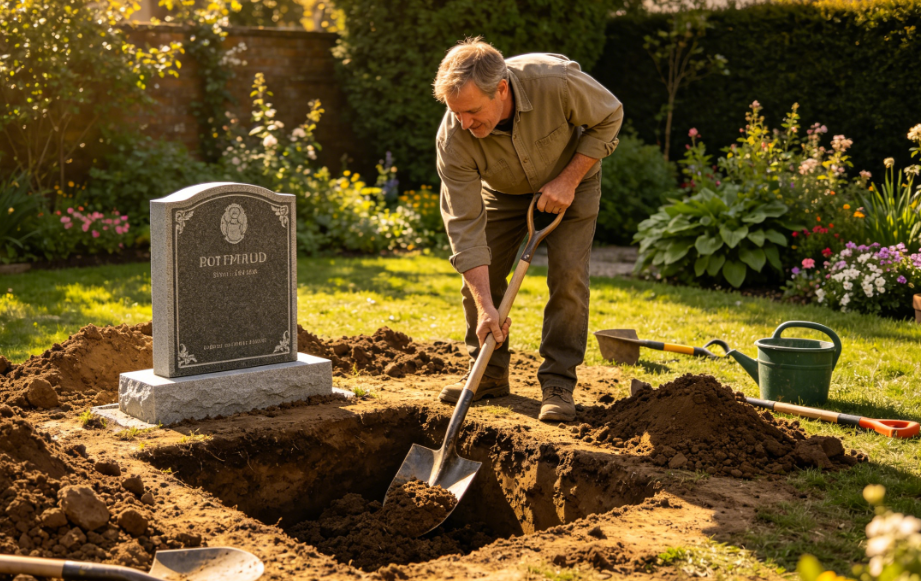
Burial – Traditional Method
Burial means placing your pet‘s body directly into the ground. This is the most traditional method.
Pros:
- No cremation, body remains whole
- Can be done in your own garden or a pet cemetery
- Tombstone placed directly above the burial site
Cons:
- Requires sufficient land
- Some areas prohibit home burial
- Body takes time to decompose
Tombstone pairing: Place the stone directly above the burial site. Flat or upright both work. Granite is recommended because soil moisture and microbes won’t affect it.
Cremation – Most Common
Cremation uses high heat to turn the pet‘s body into ashes. This is the most common method.
Pros:
- Ashes can be kept, scattered, or turned into keepsakes
- Flexible – ashes can be placed anywhere
- Cremation services widely available
Cons:
- Some owners find cremation “too industrial”
- Higher cost ($50-300)
Tombstone pairing: The urn can be buried under the stone or placed beside it. If you scatter the ashes, place the stone at the scattering site as a marker.
Aquamation (Alkaline Hydrolysis) – Eco-Friendly New Option
Aquamation, also called alkaline hydrolysis or water cremation, is a newer eco-friendly method. It uses alkali and hot water (about 150°C) to break down the body in 3-4 hours, leaving white ash-like material.
Pros:
- 90% lower carbon emissions than cremation
- No flame, more acceptable to some religions
- Resulting ashes are similar to cremation ashes
Cons:
- Not yet widely available
- Typically 20-30% more expensive than cremation
Tombstone pairing: Same as cremation. Ashes can be buried with a stone on top.
Composting – Ultimate Return to Nature
Pet composting (also called human composting or natural organic reduction) is an emerging eco-friendly method. The pet‘s body is placed in a vessel with wood chips, alfalfa, and straw. Over 30-60 days, microbes break it down into about one cubic yard of nutrient-rich soil.
Pros:
- 100% eco-friendly, zero carbon emissions
- Produces soil that can be used in your garden
- Considered the “most natural” method
Cons:
- Very few providers, legal only in a handful of states
- Higher cost ($500-1000 typically)
- Takes 30-60 days
Tombstone pairing: Use the resulting soil to plant a memorial tree. Place a small pet tombstone or memorial stone next to the tree. No ashes to bury – the body has fully become soil.
Method and Tombstone Comparison Table
| Method | Remains | Tombstone placement | Recommended stone |
|---|---|---|---|
| Burial | Whole body | Directly above | Granite (most durable) |
| Cremation | Ashes | Urn buried under or beside | Any material |
| Aquamation | Ash-like | Same as cremation | Any material |
| Composting | Soil | Soil used for tree, stone beside tree | Small slate or natural stone |