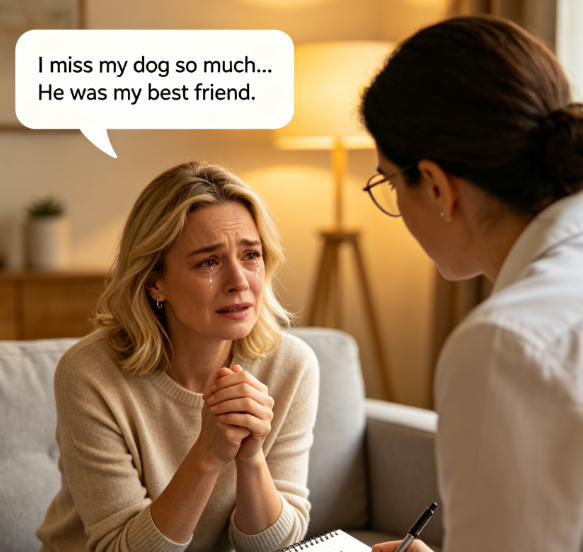
Losing a Pet Is Not Just “Losing an Animal”
When a pet that accompanied you for many years passes away, the hollowness you feel is real and immense. Yet society often minimizes it: “It’s just a dog. Get another one.” This dismissive attitude leaves many grieving pet owners afraid to speak about their pain.
According to a landmark study published in PLOS One in January 2026, the truth is the opposite. Professor Philip Hyland from Maynooth University surveyed 975 adults in the UK and found that among those who had lost a pet, up to 7.5% met the diagnostic criteria for Prolonged Grief Disorder (PGD).
Prolonged Grief Disorder is a mental health condition characterized by persistent and intense yearning, making it difficult to return to normal life. It is indistinguishable from the symptoms triggered by human bereavement.
These rates are similar to losing a sibling (8.9%) or a partner (9.1%)-. Among those who had experienced both pet loss and human loss, about one in five said the pet loss was more devastating-. Pet loss accounted for 8.1% of all severe grief cases—a percentage higher than many types of human loss.

Why Can Pet Loss Hurt More?
In modern society, human relationships are looser. Many people project their emotional depth entirely onto their pets. Pets do not betray or judge; they give unconditional, complete acceptance.
When that pillar suddenly collapses, the owner‘s psyche falls into a chaotic isolation that can be even more disorienting than traditional bereavement.
Another key finding: the symptom pattern of PGD triggered by pet loss is indistinguishable from that triggered by human loss. The grief of a pet owner is clinically just as “real” as losing a loved one.
Society’s Lagging Awareness
Despite the undeniable scientific evidence, social awareness still lags. Most labor laws do not recognize pet bereavement leave. Many people dare not share their pet’s death online. This lack of support exacerbates the psychological burden.
A 2026 study in PubMed noted that in urban China, pet loss is an increasingly salient source of grief, but due to limited social recognition and ritual support, it remains disenfranchised.
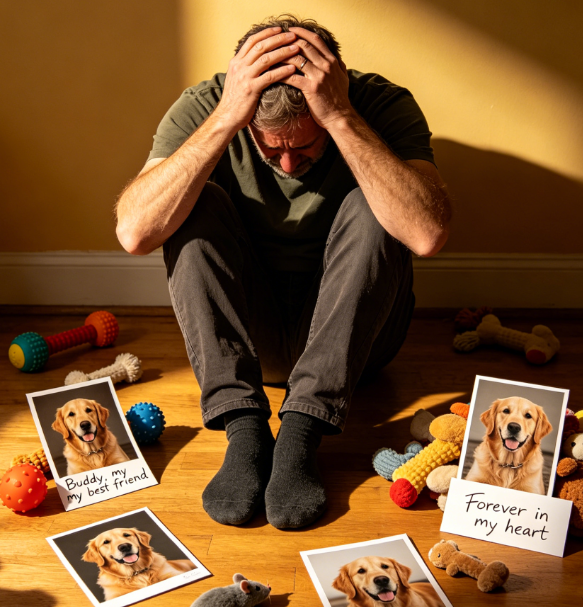
The First Step to Healing: Acknowledgment
If you are grieving a pet’s passing, remember: your feelings are real, and your loss deserves to be honored. You don’t need to apologize for grieving. The first step is acknowledging.
Mental health organizations are now advocating for workplace legislation on pet bereavement leave. Meanwhile, counseling resources and chapters dedicated to pet loss and vet wellbeing are appearing in major industry conferences.
Internal Links and Call to Action
While seeking professional help, consider placing a solid pet tombstone in your garden as an anchor for your memories. Browse ourhttps://petheadstone1.com/ for granite selections. Click our (https://petheadstone1.com/)to create a physical anchor for the grief that science now recognizes as real.