The Hidden Pet Cemetery in Hyde Park
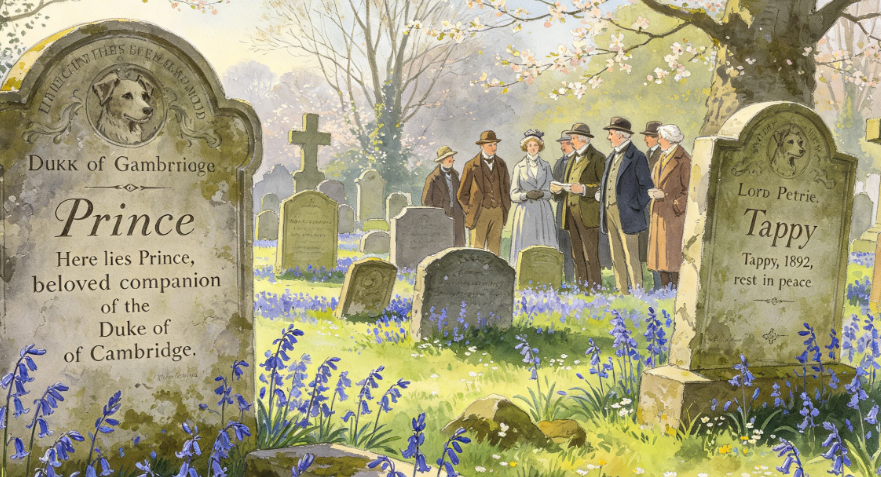
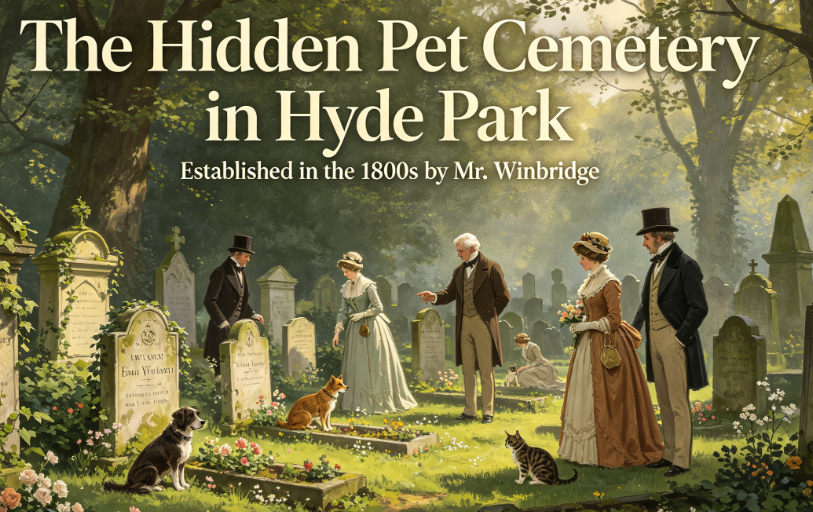
Deep within Hyde Park in London—a royal park visited by 13 million people annually—lies a Victorian pet cemetery. It was one of the first public pet cemeteries in the UK, holding over 1,000 dogs and cats. The cemetery was established in the 1800s by Mr. Winbridge, a servant to the Duke of Cambridge, on his private garden. Many of the families who buried their pets here were wealthy individuals living in grand houses on the edge of the park. At the time, this was seen as a sign of wealth and sophistication-1.
The most famous tombstones belong to the Duke of Cambridge‘s dog, Prince, who died after running into the road and being hit by a carriage. Lord Petrie’s dog Tappy, who died in 1892, is also buried there. The text on the headstones mirrors that of human graves, with some reading “here lies…” or “rest in peace.” Many graves also feature kerbstones and body stones, similar to human burial trends of the late 19th and early 20th centuries-1. The cemetery officially closed in 1903 with around 300 graves. Today, it is not open to the public but can be visited through guided tours. In springtime, the gravestones become surrounded by beautiful bluebells-1.
Queen Victoria‘s Pet Cemetery at Windsor Castle
Queen Victoria’s love for pets is well known. She had her own pet cemetery at Windsor Castle, where several horses and many dogs rest, some with elaborate tombs and bronze statues-6. After her Collie, Noble, died in 1887, she created the cemetery. It was revived in 1959 when Elizabeth II wanted somewhere to bury her first Corgi, Susan-.
Queen Victoria also visited the dog cemetery at Oatlands Park, established by the Duchess of York, and ordered the restoration of the headstones. Among the 63 headstones, one for a Great Dane named Julia bears a poetic inscription: “Here Julia rests, and here each day, Her mistress strews her grave with flowers…”-6.
Russian Imperial Pet Cemeteries
In Russia, Empress Catherine II established the first separate pet cemetery on her Tsarskoye Selo estate. Marble slabs with dedications to her beloved Italian greyhounds were placed behind the Turkish Bath pavilion. Several of these tombstones survive today-2.
In the 1830s, Emperor Nicholas I established a“Pensioners‘ Cemetery”for imperial horses, with over 120 graves marked by granite slabs inscribed with names and years of service-2. Empress Alexandra Feodorovna later established another cemetery for her dogs in Alexander Park, with granite pyramids designed by a leading architect-2.
King Charles’s Double Memorial for His Jack Russell
In 2025, a former royal gardener revealed that King Charles had created two touching memorials for his late Jack Russell terrier, Tigga. Tigga died in 2002 at age 18. The King, then Prince Charles, was devastated. The gardener recalled: “She was buried just outside the walled garden in a little wooden coffin… placed outside the walled garden because she would often get lost and was always found there, stuck. They liked the idea of putting her just outside the walled garden so she would never be stuck in there again.”-3
A statue of Tigga sits on a wall near her grave. The King also placed a second sculpture—made of woven willow by artist Emma Stothard—in Highgrove‘s stumpery-3.
What History Teaches Us
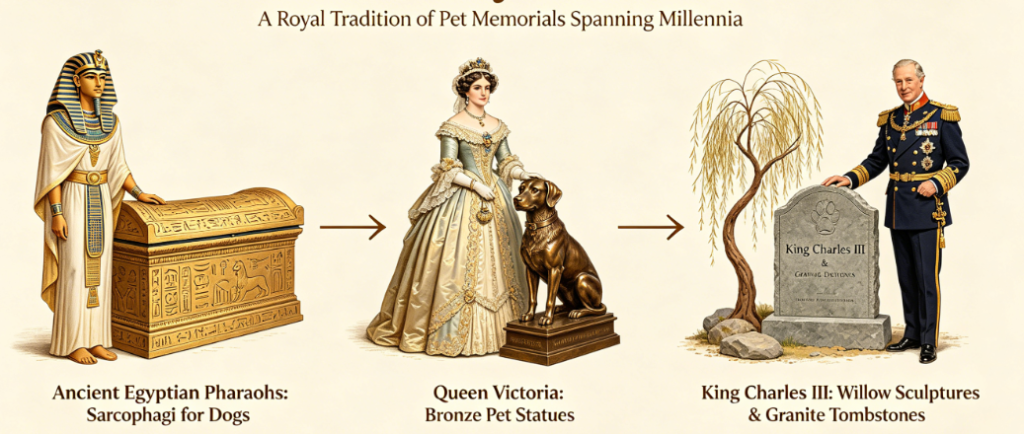
From ancient Egyptian pharaohs commissioning fine sarcophagi for their dogs to Queen Victoria’s bronze statues and King Charles‘s willow sculptures carved and engraved granite tombstones bearing pets’ names—this royal tradition spanning millennia reveals an unchanging truth: a pet tombstone is not just a stone. It is a token of love that transcends cultures and dynasties-6.
If your beloved companion deserves a unique and eternal memorial, please visit our 【Product Page】(https://petheadstone1.com/) or create a custom pet memorial stone for your pet through our 【Customization Service】(https://petheadstone1.com/).