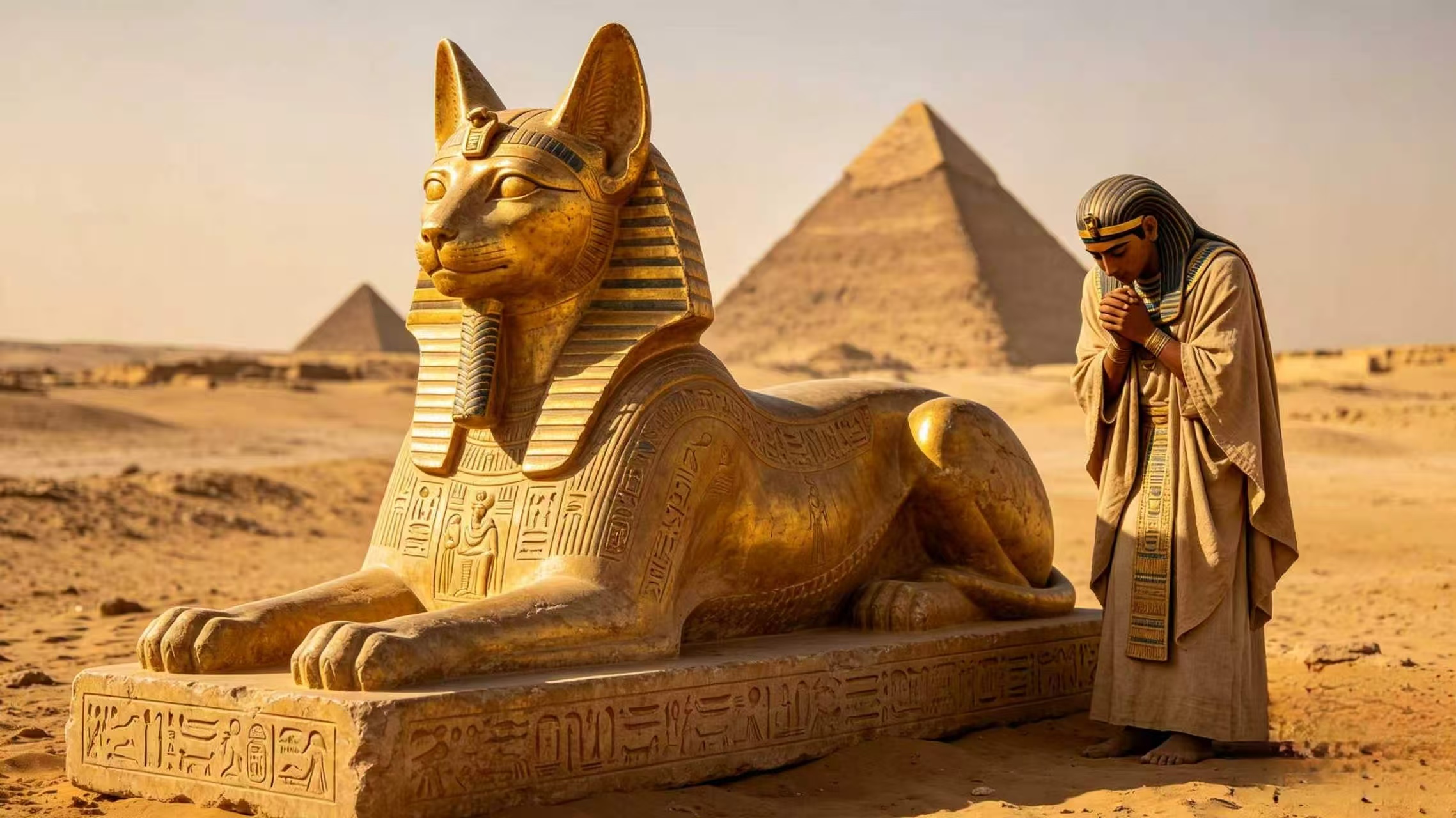
Ancient Egypt: The First Pet Tombstones
The history of erecting stones for pets dates back to ancient Egypt. Cats were seen as incarnations of the goddess Bastet. When a house cat died, the owner would shave their eyebrows as a sign of mourning. The cat’s body was mummified and placed in a small sarcophagus. The sarcophagus was carved with hieroglyphs naming the cat and praising it. This can be seen as the earliest form of the pet tombstone.
Archaeologists have found stone tablets inscribed with pet names in pharaohs‘ tombs. Although small, these tablets carried the owner’s deep affection for their pet. The ancient Egyptians believed these tablets would help the pet‘s soul find its owner in the afterlife.
The Victorian Era: The Birth of Pet Cemeteries
In the late 19th century, during the Victorian era, pet memorials became popular. Nobility would build small tombstones for their pets on their estates. In 1881, the world’s first public pet cemetery opened near Hyde Park in London. Today, hundreds of pet tombstones with heartfelt epitaphs remain there.
Victorian tombstones were typically black granite or marble. Besides the pet‘s name and dates, the engravings often included poems such as “Our faithful companion, until the Rainbow Bridge.” The shapes were mostly rectangular or obelisk-style, solemn and elegant.
Early 20th Century: The Rise of Pet Tombstones in America
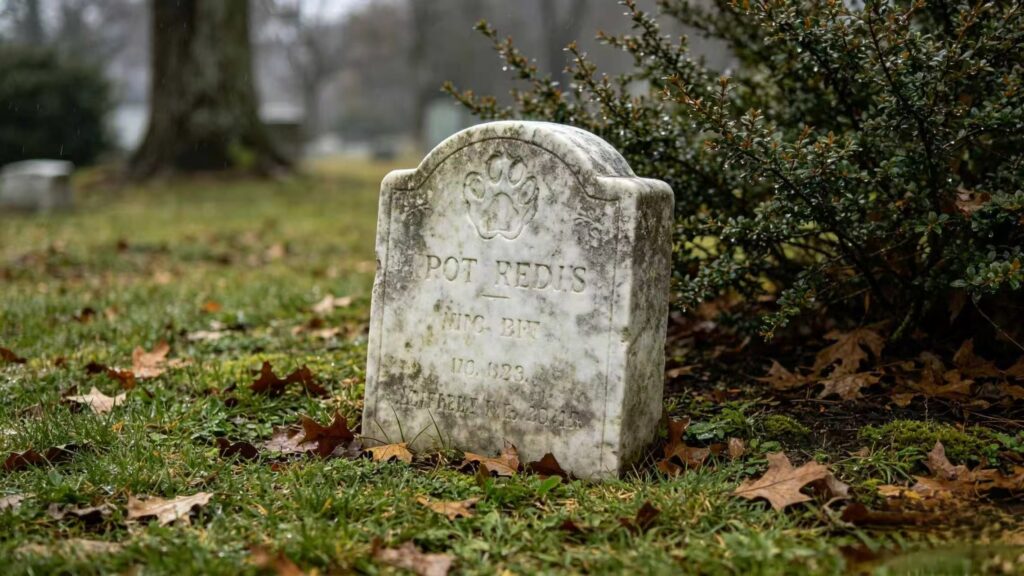
In the early 20th century, pet tombstones began to spread in the United States. As the middle class grew, more families kept pets and erected stones for them after their pets passed away. During this period, marble was the main material because it was relatively easy to carve and cheaper than granite.
However, people soon discovered that marble could not withstand acid rain. Outdoor marble tombstones became illegible after a few decades. This prompted people to search for more durable materials.
Mid to Late 20th Century: Granite Becomes Mainstream
In the mid to late 20th century, granite gradually replaced marble as the mainstream material for pet tombstones. Granite is hard, has low porosity, absorbs almost no water, and resists freezing, thawing, and UV rays. A high-quality granite tombstone can last over a hundred years.
At the same time, tombstone shapes became more diverse. Besides the traditional rectangle, heart, bone, and circle shapes appeared. Engraving technology also advanced from hand carving to sandblasting, greatly improving efficiency.
The 21st Century: Personalization and Digitalization
Entering the 21st century, pet tombstones entered an era of personalization. The maturity of laser engraving technology allows owners to permanently etch their pet‘s photo onto stone. 3D printing makes three-dimensional sculptures possible. QR code tombstones combine physical memorials with cloud-based digital memorials.
Today, a pet tombstone can be any shape, any color, engraved with anything you want to say. It is no longer just a stone but a carrier of the emotional bond between pet and owner.
If your beloved companion deserves a unique and eternal memorial, please visit our 【Product Page】(https://petheadstone1.com/products) or create a custom pet memorial stone for your pet through our 【Customization Service】(https://petheadstone1.com/custom).